
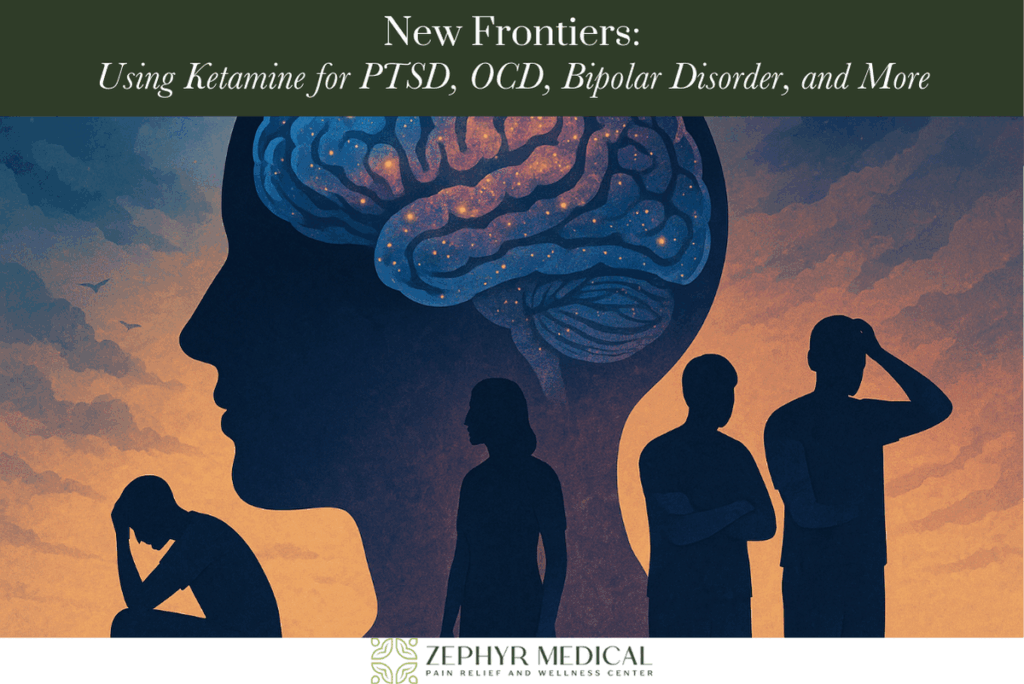
For decades, ketamine was primarily known as an anesthetic. Today, it has emerged as one of the most promising treatments in mental health care. While much attention has been given to ketamine’s role in treatment-resistant depression and chronic pain, research and clinical experience are expanding its potential applications. At Zephyr Medical in Brooklyn, led by Dr. Benjamin Portal, we’re exploring how ketamine therapy may support individuals with PTSD, obsessive-compulsive disorder (OCD), bipolar depression, and even substance use disorders.
Why Ketamine Is Different
Unlike traditional antidepressants, which often take weeks to work, ketamine acts on the NMDA receptor, influencing glutamate—one of the brain’s primary neurotransmitters. This rapid action leads to increased neuroplasticity, giving the brain an opportunity to break free from rigid, negative patterns of thought and behavior.
Ketamine for PTSD
Post-traumatic stress disorder (PTSD) can trap individuals in cycles of fear, flashbacks, and hypervigilance. Ketamine infusions may help by:
- Reducing hyperactivity in brain regions linked to fear responses.
- Allowing patients to process trauma with less emotional overwhelm.
- Creating a “window of opportunity” for therapy to be more effective.
Ketamine for OCD
Obsessive-compulsive disorder involves intrusive thoughts and compulsive behaviors. Early studies suggest ketamine may:
- Disrupt obsessive neural loops.
- Offer temporary relief from intrusive thoughts.
- Enhance the effectiveness of behavioral therapies like ERP (exposure and response prevention).
Ketamine for Bipolar Depression
While mania is not treated with ketamine, bipolar depression—a phase often resistant to medications—may respond to carefully monitored infusions. Benefits can include:
- Rapid mood elevation.
- Increased motivation and energy.
- Potential to reduce reliance on multiple medications.
Ketamine for Substance Use Disorders
Emerging research shows ketamine might also help individuals struggling with alcohol or drug dependence by:
- Reducing cravings.
- Interrupting conditioned reward cycles in the brain.
- Facilitating deeper engagement in recovery therapies.
Q&A: What Patients Want to Know
Q: Is ketamine FDA-approved for these conditions?
A: Ketamine is FDA-approved as an anesthetic, and a nasal form (esketamine) is FDA-approved for treatment-resistant depression. Its use for PTSD, OCD, bipolar depression, and substance use disorders is considered “off-label,” but supported by growing evidence and careful medical oversight.
Q: How quickly will I notice results?
A: Many patients feel improvements within hours to days. Some conditions, like OCD or substance use, may require multiple infusions before meaningful changes appear.
Q: Is ketamine safe for people with bipolar disorder?
A: Yes, when properly monitored. However, ketamine is not used during manic episodes. At Zephyr Medical, Dr. Benjamin Portal and our clinical team carefully assess each patient’s mood state before proceeding.
Q: Will ketamine replace my current medications?
A: Not necessarily. For many, ketamine complements existing treatments. Some patients are eventually able to reduce medication loads under medical guidance.
Q: How is treatment administered?
A: At Zephyr Medical, ketamine is delivered via IV infusion in a safe, comfortable setting with continuous monitoring to ensure both effectiveness and safety.
Why Choose Zephyr Medical?
At Zephyr Medical, we provide a personalized, evidence-based approach to ketamine therapy. Dr. Benjamin Portal and our dedicated care team ensure each treatment plan is tailored to the individual’s mental health history, current needs, and long-term goals. Patients can feel confident they’re receiving compassionate, expert care every step of the way.
Contact Us
Zephyr Medical
111 Livingston St Suite 1901
Brooklyn, NY 11201
📞 (646) 727-9977
🌐 zephyrmd.com